Red Flags: When Parental Expectations Become Too Much
Parental expectations are often rooted in love, protection, and the desire to see children succeed. Every parent wants their child to have opportunities, stability, and a fulfilling future. However, when expectations cross the line from encouragement to pressure, they can quietly damage a child’s confidence, mental well-being, and long-term growth.
The difference between healthy guidance and overwhelming expectations is subtle — but the impact is significant. Understanding the red flags early can help families build stronger, more supportive relationships.
The Difference Between Support and Pressure
Healthy expectations motivate children. They encourage discipline, accountability, and resilience. Supportive parents guide, listen, and adapt based on their child’s strengths and interests.
Excessive expectations, however, often feel rigid and one-sided. Instead of collaboration, there is control. Instead of encouragement, there is constant comparison. Instead of growth, there is fear of failure.
When achievement becomes more important than emotional well-being, pressure replaces purpose.
Red Flag 1: Love Feels Conditional on Performance
One of the most damaging signs of excessive expectations is when children feel valued only for their achievements.
If praise comes only after high grades, trophies, or visible success, children may begin to associate love with performance. Over time, this creates anxiety, perfectionism, and fear of making mistakes.
Children thrive when they know they are appreciated for who they are — not just what they accomplish.

When expectations feel like pressure instead of support.
Red Flag 2: Constant Comparison With Others
Comparison is often disguised as motivation. Statements like “Look at your cousin” or “Your friend scored higher” may seem harmless, but repeated comparisons can weaken self-esteem.
Every child has a unique pace of learning and personal strengths. Constant comparison shifts focus from self-improvement to competition, which can create resentment and insecurity.
Healthy growth is measured against one’s own progress — not someone else’s success.
Red Flag 3: Ignoring a Child’s Interests and Strengths
Sometimes parents push career paths or academic streams based on societal status, financial security, or personal dreams they could not fulfill themselves.
When a child’s interests are dismissed repeatedly, it sends a message that their individuality does not matter. This often leads to disengagement, emotional withdrawal, or internal conflict.
True guidance considers a child’s personality, talents, and long-term satisfaction — not just prestige or income potential.
Red Flag 4: Fear-Based Motivation
Statements such as “You will fail in life if you don’t do this” or “You’ll regret it forever” use fear as a motivator.
Fear may produce short-term results, but it damages long-term confidence. Children raised under constant fear of failure often develop anxiety, self-doubt, and avoidance behaviors.
Motivation works best when it is built on belief, not fear.
Red Flag 5: No Room for Mistakes
Mistakes are part of learning. When children are punished harshly for minor failures or discouraged from trying new things, they may stop taking risks altogether.
Over time, this creates perfectionism or procrastination. Children either aim for unrealistic standards or avoid challenges entirely.
A supportive environment treats mistakes as lessons — not evidence of inadequacy.
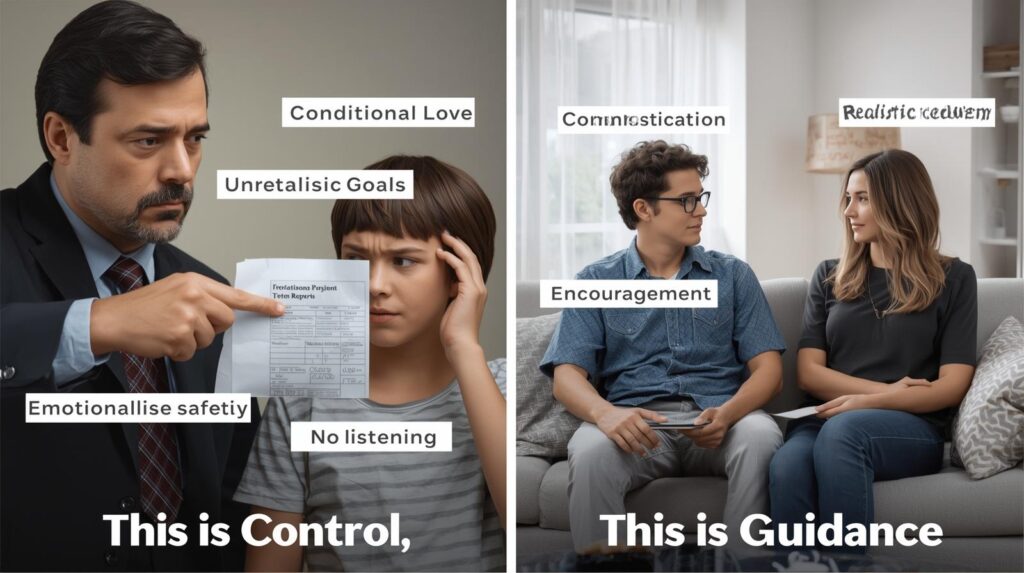
The difference between control and guidance.
Emotional and Psychological Impact of Excessive Expectations
When parental pressure becomes overwhelming, children may experience:
- Chronic stress and anxiety
- Low self-esteem
- Burnout at a young age
- Difficulty making independent decisions
- Fear of disappointing others
- Suppressed creativity
In extreme cases, constant pressure can affect mental health and strain family relationships.
It is important to recognize that success achieved at the cost of emotional stability is not sustainable.
Why Parents Sometimes Overdo Expectations
Understanding the root causes can help address the issue compassionately.
Many parents project expectations due to:
- Financial insecurities
- Social pressure
- Fear of an uncertain job market
- Personal unfulfilled ambitions
- Cultural norms around status and achievement
While these concerns are valid, they should not overshadow a child’s individuality and emotional well-being.
Healthy Alternatives to Excessive Pressure
Instead of imposing rigid expectations, parents can adopt balanced approaches:
1. Open Communication
Encourage honest conversations about goals, fears, and interests. Listening without judgment builds trust.
2. Focus on Effort Over Outcome
Appreciate hard work, discipline, and improvement rather than only final results.
3. Encourage Exploration
Allow children to experiment with different interests, activities, and learning paths.
4. Set Realistic Goals
Collaborate on achievable targets that challenge but do not overwhelm.
5. Prioritize Emotional Well-Being
Mental health and happiness are foundational for long-term success.
When to Seek Support
If a child shows signs of persistent stress, withdrawal, or loss of motivation, it may be helpful to seek guidance from a school counselor, career mentor, or mental health professional.
Sometimes, an external perspective can help both parents and children realign expectations constructively.
Blog by Hanumanthrao